Send
Close Add comments:
(status displays here)
Got it! This site "creationpie.com" uses cookies. You consent to this by clicking on "Got it!" or by continuing to use this website. Note: This appears on each machine/browser from which this site is accessed.
The heart problem of clean and unclean
1. The heart problem of clean and unclean
This content is being developed.
2. Nothing is something
Many people think of actions as having two choices, "
do it" or "
do not do it" - a logical fallacy called "
false dilemma". There is a third action that is at the heart of computer science.
1. "look and do" .
2. "look not do".
3. "do not look" - it may not be necessary and, in general, "does not matter".
Efficient algorithms in computer science rely on knowing when to look and when not to look.
Good logical arguments do not include anything not relevant (needed) for the logical argument.
Doing nothing is something and can be important.
[Apostle John, professionals]
3. Opposites and overlap
 |
 |
less than
greater than
|
not less than
not greater than
|
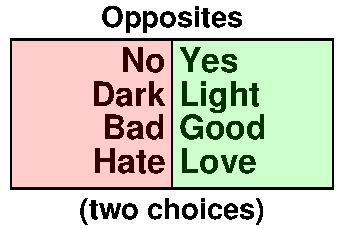
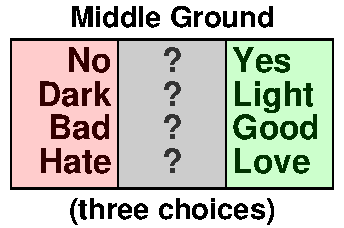
Not everything has just
two choices. Sometimes there is a middle value (
three choices) that can be claimed or denied by either side (or both).
Aristotle describes how deceivers (Sophists, etc.) use the "
gray" area between "
light" and "
darkness" to confuse (in various ways). This can be called the fact check fallacy which is equivalent, logically, to the converse fallacy.
4. Darkness
There is no such thing as darkness; only a failure to see. Malcolm Muggeridge (British broadcaster)
5. Multi-valued logic

A program that requests a user response to a question. Very often, the valid responses are
yes,
no, and
escape (or
cancel, etc.), gracefully avoid the question.
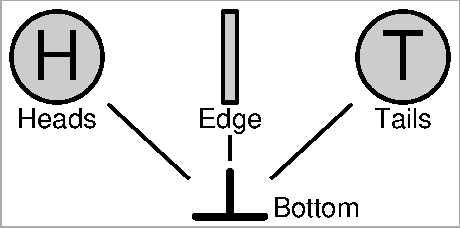
6. Sample space for a coin flip
To determine the probability that an event happens, one needs to know the sample space.
The sample space consists of all the possible outcomes of an event. The sample space should be
"collectively exhaustive" (contain all possibilities) and be
"mutually exclusive" (no overlap of outcomes).
What is the "
sample space" (possible outcomes) for a coin flip?
7. Four results
What if the coin rolls off the table?
What if the coin disappears?
What if something else happens?
The value
"bottom" or
"⊥" is used to indicate these other possibilities.
In many programming languages, the empty string is
"". However, the
Null value can be used to indicate
"bottom" or
"no value".
In Python, the bottom value is None.
In SQL, NULL is the bottom value
In JavaScript, undefined is the bottom value
8. Alan Turing: halting problem
Alan Turing (1912-1954) developed the ideas that proved the limits of computing before the first programmable digital computer was built.
Claude Shannon (1939) showed that one could built such a computer.
The
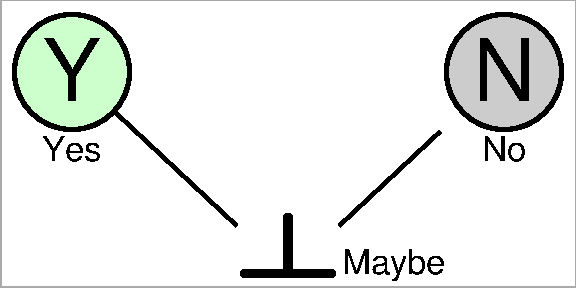
halting problem (Turing, Turing machine, 1936) result: It is impossible to write a computer program that looks at another computer program (and its data) and determines whether that other computer program eventually halts.
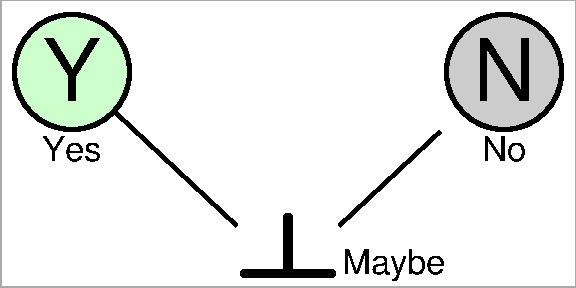
The possible answers for a computation of an undecidable problem are yes (true), no (false), or maybe (wait forever). One may be able to go "
outside the system" to determine a better answer.
An abstract (or physical) computer can be called a
Turing Machine. A
Turing complete programming language can compute any computable function.
[waiting for a program to stop, secure form submission, virus detection]
9. Entropy of yes no answers
The entropy of giving a definitive "
yes" or "
no" answer to a given question can be plotted for the probability of the result of a choice.
"yes" is a definitive answer.
"no" is a definitive answer.
"maybe" is the "bottom" or "⊥" or "?" (missing) value that may have a probability associated with it.
Note that when the probability is
0.5, as in a flip of a fair coin, the entropy is
0.5.
10. Play it safe: food for thought
Some good food is prepared.
You start with a clean plate (e.g., out of the dishwasher).
The good food is put on the plate.
Is the plate now clean or unclean?
Does putting bad food on the plate change your answer?
You eat the good food off the plate.
Is the plate now clean or unclean?
You run the plate through the dishwasher.
Is the plate now clean or unclean?
Discuss:
What does it mean to have a clean plate?
What does it mean to have an unclean plate?
Why is it important to consider defrosting vegetables before cooking them?
It is the thaw-it that counts.
11. Psalms 51:10
Psalms 51:10 Create in me a clean heart, O God; and renew a right spirit within me. [kjv]
… טהור … ורוח … [he]
καρδιαν καθαραν κτισον εν εμοι ο θεος και πνευμα ευθες εγκαινισον εν τοις εγκατοις μου [lxx]
Are
"clean" and
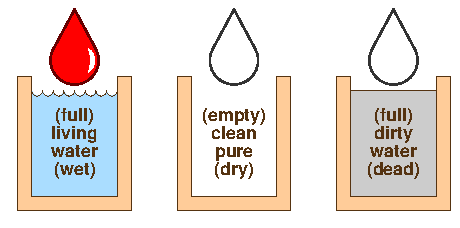
"unclean" opposites? What is the difference between being empty and clean and pure and dry compared to being full of dirty water and dead? There are two states mentioned in this verse and one implied.
1. Implied: One has a heart filled with what is not good.
2. Clean the heart out of not good so it is empty.
3. Desire: Fill that heart with good.
One implication is that one must get rid of the not good to become clean. Then one can be filled with good.
[Monty Hall problem]
12. The heart problem of clean and unclean
Psalms 51:10 Create in me a clean heart, O God; and renew a right spirit within me. [kjv]
… טהור … ורוח … [he]
καρδιαν καθαραν κτισον εν εμοι ο θεος και πνευμα ευθες εγκαινισον εν τοις εγκατοις μου [lxx]
The
ancient Greek word
"καθαρός" ≈ "clean, clear, pure". What does it mean to have a
clean heart? What does it mean to have an
unclean heart? Are they
opposites?
What about the
"heart"? How does Jesus use the word for
"heart" in Matthew?
Would you rather be full of living water and wet? How many choices are there? It appears that there are (at least) three choices. The
OT (Old Testament) has many verses on
clean and
unclean. Here, we are interested in how Jesus uses the word in Matthew.
13. Psalms 51:10 Clean heart
Psalms 51:10 Create in me a clean heart, O God; and renew a right spirit within me. [kjv]
… טהור … ורוח … [he]
καρδιαν καθαραν κτισον εν εμοι ο θεος και πνευμα ευθες εγκαινισον εν τοις εγκατοις μου [lxx]
*H2889 טָּהוֹר טָּהוֹר (taw-hore') : or tahor {taw-hore'}; from H2891; pure (in a physical, chemical, ceremonial or moral sense):--clean, fair, pure(-ness).
The
ancient Greek word
"καθαρός" ≈ "clean, clear, pure".
14. Psalms 51:10 Right spirit
Psalms 51:10 Create in me a clean heart, O God; and renew a right spirit within me. [kjv]
… טהור … ורוח … [he]
καρδιαν καθαραν κτισον εν εμοι ο θεος και πνευμα ευθες εγκαινισον εν τοις εγκατοις μου [lxx]
*H3559 כּוּן (koon) : a primitive root; properly, to be erect (i.e. stand perpendicular); hence (causatively) to set up, in a great variety of applications, whether literal (establish, fix, prepare, apply), or figurative (appoint, render sure, proper or prosperous):--certain(-ty), confirm, direct, faithfulness, fashion, fasten, firm, be fitted, be fixed, frame, be meet, ordain, order, perfect, (make) preparation, prepare (self), provide, make provision, (be, make) ready, right, set (aright, fast, forth), be stable, (e-)stablish, stand, tarry, X very deed.
The
ancient Greek word
"εὐθέσι" ≈ "straight, direct" (dative plural) and is from
"εὐθύς" ≈ "straight, direct". The
modern Greek word
"ευθύς" (ev-THEES) ≈ "straight, direct".
15. Strongs - directly
16. Matthew 4:19-20,22 Directly
Matthew 4:19 And he saith unto them, Follow me, and I will make you fishers of men. [kjv]
και λεγει αυτοις δευτε οπισω μου και ποιησω υμας αλιεις ανθρωπων [gnt]
4:20 And they straightway left their nets, and followed him. [kjv]
οι δε ευθεως αφεντες τα δικτυα ηκολουθησαν αυτω [gnt]
4:22 And they immediately left the ship and their father, and followed him. [kjv]
οι δε ευθεως αφεντες το πλοιον και τον πατερα αυτων ηκολουθησαν αυτω [gnt]
The
ancient Greek word
"εὐθέσι" ≈ "straight, direct" (dative plural) and is from
"εὐθύς" ≈ "straight, direct". The
modern Greek word
"εὐθύς" (eh-THEES) ≈ "straight, direct".
Note how the
KJV (King James Version) English uses different words for the same Greek word.
17. Psalms 51:10
KJV: Create in me a clean heart, O God; and renew a right spirit within me.
Hebrew: לב טהור ברא לי אלהים ורוח נכון חדש בקרבי׃
Greek: καρδιαν καθαραν κτισον εν εμοι ο θεος και πνευμα ευθες εγκαινισον εν τοις εγκατοις μου
18. Psalms 73:1
Psalms 73:1 Truly God is good to Israel, even to such as are of a clean heart. [kjv]
ψαλμος τω ασαφ ως αγαθος τω ισραηλ ο θεος τοις ευθεσι τη καρδια [lxx]
*H1249 בַּר (bar) : from H1305 (in its various senses); beloved; also pure, empty:--choice, clean, clear, pure.
What does this verse mean for the idea of a
"clean" "heart"?
The
ancient Greek word
"εὐθέσι" ≈ "straight, direct" (dative plural) and is from
"εὐθύς" ≈ "straight, direct". The
modern Greek word
"ευθύς" (ev-THEES) ≈ "straight, direct".
19. Words in Psalms
Psalms 51:10 Create in me a clean heart, O God; and renew a right spirit within me. [kjv]
… טהור … ורוח … [he]
καρδιαν καθαραν κτισον εν εμοι ο θεος και πνευμα ευθες εγκαινισον εν τοις εγκατοις μου [lxx]
73:1 Truly God is good to Israel, even to such as are of a clean heart. [kjv]
ψαλμος τω ασαφ ως αγαθος τω ισραηλ ο θεος τοις ευθεσι τη καρδια [lxx]
Note how the
KJV translates different Hebrew words with the same English word.
20. Psalms 73:1
KJV: Truly God is good to Israel, even to such as are of a clean heart.
Hebrew: מזמור לאסף אך טוב לישראל אלהים לברי לבב׃
Greek: ψαλμος τω ασαφ ως αγαθος τω ισραηλ ο θεος τοις ευθεσι τη καρδια
21. Matthew 23:25-26 Cleaning the cup and bowl
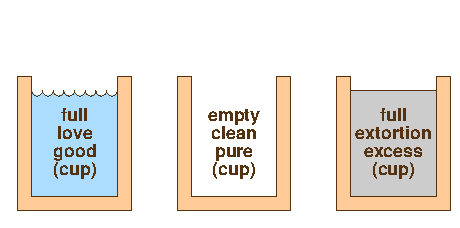
Matthew 23:25 Woe unto you, scribes and Pharisees, hypocrites ! for ye make clean the outside of the cup and of the platter, but within they are full of extortion and excess. [kjv]
23:26 Thou blind Pharisee, cleanse first that which is within the cup and platter, that the outside of them may be clean also. [kjv]
They are "empty" on the "outside".
They are "full" of "extortion" and "excess".
If they "clean" the "inside" they will then be "empty" on both "inside" and "outside".
What then do they need to do to be "
good" and have "
love"?
The
ancient Greek word
"καθαρός" ≈ "clean, clear, pure" which is negated with an alpha prefix as
"ἀκάθαρτος" ≈ "unclean, impure". The Greek word
"clean" is often given a positive connotation. What happens when a "
bird"
"cleans" out your blueberry bush of every piece of "
fruit" on the bush? The bush is
"clean". Is that
good or
not good?
22. Strongs - clean
*G2513 *26 καθαρός (kath-ar-os') : of uncertain affinity; clean (literally or figuratively):--clean, clear, pure.
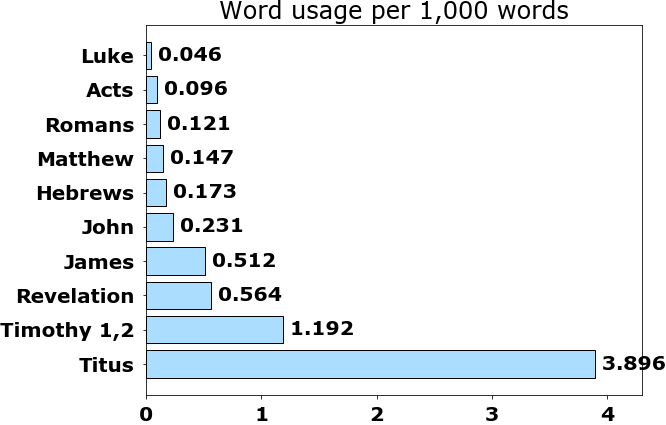 |
Words: καθαρα=7 καθαρας=2 καθαροι=4 καθαροις καθαρον=7 καθαρος=3 καθαρω=2
|
The
ancient Greek word
"καθαρός" ≈ "clean, clear, pure" which is negated with an
alpha prefix as
"ἀκάθαρτος" ≈ "unclean, impure".
How many ways can something be "clean"?
How many ways can something be "unclean"?
23. Strongs - unclean
*G167 *0 ἀκαθαρσία (ak-ath-ar-see'-ah) : from G169 ἀκάθαρτος; impurity (the quality), physically or morally:--uncleanness.
*G168 ἀκαθάρτης (ak-ath-ar'-tace) : from G169 ἀκάθαρτος; impurity (the state), morally:--filthiness.
*G169 *31 ἀκάθαρτος (ak-ath'-ar-tos) : from G1 (as a negative particle) and a presumed derivative of G2508 (meaning cleansed); impure (ceremonially, morally (lewd) or specially, (demonic)):--foul, unclean.
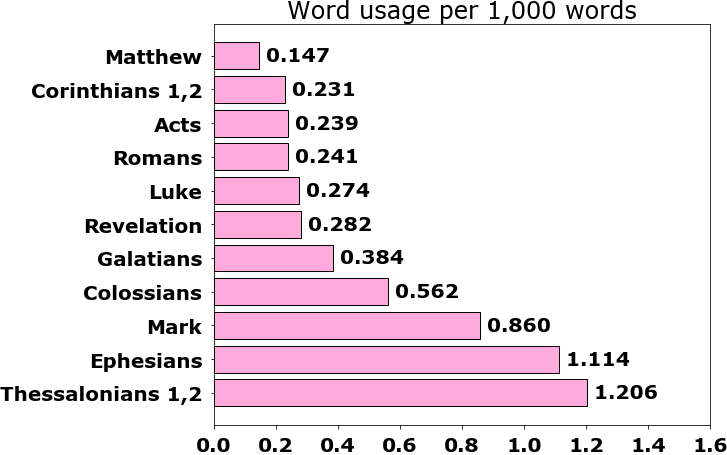 |
Words: ακαθαρσια=5 ακαθαρσιαν=2 ακαθαρσιας=3 ακαθαρτα=6 ακαθαρτοις=2 ακαθαρτον=9 ακαθαρτος ακαθαρτου=4 ακαθαρτω=5 ακαθαρτων=4
|
The
ancient Greek word
"καθαρός" ≈ "clean, clear, pure" which is negated with an
alpha prefix as
"ἀκάθαρτος" ≈ "unclean, impure".
These two words are
opposites (by the use of the alpha negating prefix). Something
"clean" is
"empty". Something
"not clean" is
"not empty". Is something
"not clean" good or
not good?
24. Revelation 18:2 Foul spirits
Revelation 18:2 And he cried mightily with a strong voice, saying, Babylon the great is fallen, is fallen, and is become the habitation of devils, and the hold of every foul spirit, and a cage of every unclean and hateful bird. [kjv]
και εκραξεν εν ισχυι ισχυρα φωνη μεγαλη λεγων επεσεν επεσεν βαβυλων η μεγαλη και εγενετο κατοικητηριον δαιμονων δαιμονιων και φυλακη παντος πνευματος ακαθαρτου και φυλακη παντος ορνεου ακαθαρτου και μεμισημενου [gnt]
The Greek for
"foul" is that of
"unclean". The
KJV English tends not to repeat words while the Greek does. The
ancient Greek word
"καθαρός" ≈ "clean, clear, pure" which is negated with an alpha prefix as
"ἀκάθαρτος" ≈ "unclean, impure".
The Greek for "
spirits" is the word for "
spirit" as in "
Holy" "
Spirit". Can the word for "
spirit" be
not good?
If
"clean" is
empty, then
"unclean" as
"not clean" as
"not empty" could be
good or
not good. Why might the word
"hateful" have been added? Is it necessary?
25. Cleansed
Matthew 5:8 Blessed are the pure in heart: for they shall see God. [kjv]
μακαριοι οι καθαροι τη καρδια οτι αυτοι τον θεον οψονται [gnt]
11:5 … the lepers are cleansed, … [kjv]
τυφλοι αναβλεπουσιν και χωλοι περιπατουσιν λεπροι καθαριζονται και κωφοι ακουουσιν και νεκροι εγειρονται και πτωχοι ευαγγελιζονται [gnt]
The
ancient Greek word
"καθαρός" ≈ "clean, clear, pure".
Are those
"pure" in
"heart" "happy"?
A folk etymology is that the English name
"Catherine" comes from the ancient Greek word
"καθαρός" ≈ "clean, clear, pure" but it comes from the ancient Greek word
"Αἰκατερίνη" ≈ "Goddess Hecate". It is possible that they are related. Related English names are "
Caitlin", "
Karen" and "
Katrina".
26. Matthew 5:28 Heart
Matthew 5:28 But I say unto you, That whosoever looketh on a woman to lust after her hath committed adultery with her already in his heart. [kjv]
εγω δε λεγω υμιν οτι πας ο βλεπων γυναικα προς το επιθυμησαι αυτης αυτην ηδη εμοιχευσεν αυτην εν τη καρδια αυτου [gnt]
The ancient Greek word
"καρδία" ≈ "heart" as a source of emotion, but could mean
"mind",
"stomach",
"inner part". It is related to the Latin word
"cor" ≈ "heart".
This idea of
"heart" will come up later in the Sermon on the Mount in the
"treasure" verses.
"Heart" appears to be a subset of
"treasure".
Matthew 6:21 ... where your treasure is, there your heart is ...
Not the same: ... where your heart is, there your treasure is ...
Is the "
heart" better described as a
location or as a
direction?
27. Matthew 6:21 Heart
Matthew 6:21 For where your treasure is, there will your heart be also. [kjv]
οπου γαρ εστιν ο θησαυρος υμων σου εκει εσται και η καρδια υμων σου [gnt]
Rather than a
destination or
location, the word for
"heart" appears to be used as a
direction in which one is headed.
[gates and changed signs]
The word for
"treasure" appears to be that of a "
goal" rather than a physical entity.
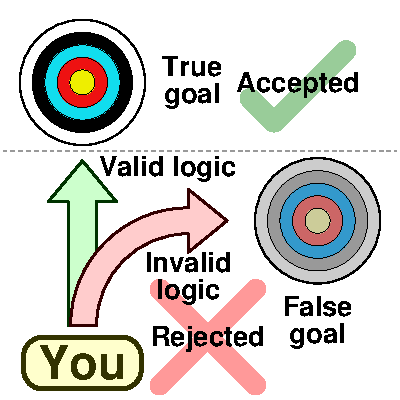
... for where your goal is, your direction will be towards that goal.
Do you have the right
goal? Let us get to the
"heart" of the matter.
[Waterfall method]
28. Matthew 9:4 Know thoughts
Matthew 9:4 And Jesus knowing their thoughts said, Wherefore think ye evil in your hearts? [kjv]
και ιδων ειδως ο ιησους τας ενθυμησεις αυτων ειπεν ινα τι υμεις ενθυμεισθε πονηρα εν ταις καρδιαις υμων [gnt]
Did Jesus really know their thoughts? This is connecting commentary and a decision/inference made by Matthew.
29. Lowly birds
Matthew 13:4 And when he sowed, some seeds fell by the way side, and the fowls came and devoured them up: [kjv]
και εν τω σπειρειν αυτον α μεν επεσεν παρα την οδον και ηλθεν ελθοντα τα πετεινα και κατεφαγεν αυτα [gnt]
11:29 Take my yoke upon you, and learn of me; for I am meek and lowly in heart: and ye shall find rest unto your souls. [kjv]
αρατε τον ζυγον μου εφ υμας και μαθετε απ εμου οτι πραος πραυς ειμι και ταπεινος τη καρδια και ευρησετε αναπαυσιν ταις ψυχαις υμων [gnt]
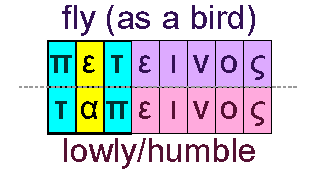
The etymology of the Greek word for
"lowly" or
"humble" is not known. As a
Spoonerism (exchanged consonants), the word for
"lowly" or
"humble" is a play on words with
"birds"
"πετεινός" ≈ "fully fledged, able to fly" as in a "bird".
"ταπεινός" ≈ "low-lying, humbled, downcast" (etymology unknown)
30. Matthew 12:34
Matthew 12:34 O generation of vipers, how can ye, being evil, speak good things? for out of the abundance of the heart the mouth speaketh. [kjv]
γεννηματα εχιδνων πως δυνασθε αγαθα λαλειν πονηροι οντες εκ γαρ του περισσευματος της καρδιας το στομα λαλει [gnt]
Can one
always know the
heart, good or evil, by what one
speaks?
Statement: ... for out of the abundance of the heart the mouth speaketh!
Question: ... for out of the abundance of the heart the mouth speaketh?
A
question allows a yes or no answer. A
statement requires a yes answer.
Does not Jesus often call the religious establishment "
hypocrites" as in
pretending or
acting? The Greek definition of "
hypocrite" means that you "
think" in your
"heart" one thing and "
say" another. How can then one know about the
"heart" from what one "
says"?
Discuss: Which translation, statement or question, might the church (historically) prefer?
31. Matthew Treasure and heart
Matthew 12:35 A good man out of the good treasure of the heart bringeth forth good things: and an evil man out of the evil treasure bringeth forth evil things. [kjv]
ο αγαθος ανθρωπος εκ του αγαθου θησαυρου της καρδιας εκβαλλει τα αγαθα και ο πονηρος ανθρωπος εκ του πονηρου θησαυρου εκβαλλει πονηρα [gnt]
The words "
of the heart" are not in some Greek manuscripts. It appears, that
"treasure" can be
"good" or
"evil" as
"oppression". Might treasure be in the eye of the beholder?
A "good" "man" and "good" "treasure" appear to be connected.
An "evil" "man" and "evil" "treasure" appear to be connected.
Is
"treasure" better described as a
location or as a
goal?
6:21 For where your treasure is, there will your heart be also. [kjv]
32. Matthew 12:40 Heart of the earth
Matthew 12:40 For as Jonas was three days and three nights in the whale's belly; so shall the Son of man be three days and three nights in the heart of the earth. [kjv]
Many focus on the
literal "three" "days" and
"three" "nights" and
assume they know what constitutes the
"heart" of the
"earth" - the words that come first in the Greek.
Greek word order:
... so that is the son of man in the heart of the earth three days and three nights.
What is "heart"? Is it related to "treasure"?
What is "earth"? Is it related to "sand"?
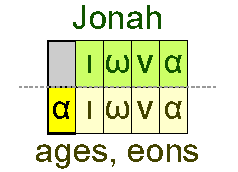
How can a "day" and a "night" go into the "ages"?
33. Matthew and Isaiah
Matthew 13:15 For this people's heart is waxed gross, and their ears are dull of hearing, and their eyes they have closed; lest at any time they should see with their eyes, and hear with their ears, and should understand with their heart, and should be converted, and I should heal them. [kjv]
13:16 But blessed are your eyes, for they see: and your ears, for they hear. [kjv]
13:17 For verily I say unto you, That many prophets and righteous men have desired to see those things which ye see, and have not seen them; and to hear those things which ye hear, and have not heard them. [kjv]
Isaiah 6:10 Make the heart of this people fat, and make their ears heavy, and shut their eyes; lest they see with their eyes, and hear with their ears, and understand with their heart, and convert, and be healed. [kjv]
34. Matthew 13:4,19 Birds and the evil one
Matthew 13:4 And when he sowed, some seeds fell by the way side, and the fowls came and devoured them up: [kjv]
και εν τω σπειρειν αυτον α μεν επεσεν παρα την οδον και ηλθεν ελθοντα τα πετεινα και κατεφαγεν αυτα [gnt]
13:19 When any one heareth the word of the kingdom, and understandeth it not, then cometh the wicked one, and catcheth away that which was sown in his heart. This is he which received seed by the way side. [kjv]
παντος ακουοντος τον λογον της βασιλειας και μη συνιεντος ερχεται ο πονηρος και αρπαζει το εσπαρμενον εν τη καρδια αυτου ουτος εστιν ο παρα την οδον σπαρεις [gnt]
Jesus relates "
devour" as in "
eating" to
"catcheth away" which is related to the word for
"rapture". The
KJV translates as "
evil" or "
wicked" the Greek word that means
"oppression" or
"oppressor". Saying:
You'll be birdseed.
35. Matthew 13:4,19 Devour and snatch away
Matthew 13:4 And when he sowed, some seeds fell by the way side, and the fowls came and devoured them up: [kjv]
13:19 When any one heareth the word of the kingdom, and understandeth it not, then cometh the wicked one, and catcheth away that which was sown in his heart. This is he which received seed by the way side. [kjv]
The Greek for
"snatch away" is the word used for
"rapture" and the source of the English word
"harpoon". It is also used as
"ravenous" in terms of "
wolves".
Saying:
You'll be birdseed. The "
seed" that was
"snatched away" in parable 1 appears to have been deposited (by the
"birds") in parable 2 as "
weeds" and then grows into a "
tree" in parable 3 so that those
"birds" have a place to make their "
nests".
36. Matthew 15:7-8
Matthew 15:7 Ye hypocrites, well did Esaias prophesy of you, saying, [kjv]
υποκριται καλως προεφητευσεν επροφητευσεν περι υμων ησαιας λεγων [gnt]
15:8 This people draweth nigh unto me with their mouth, and honoureth me with their lips; but their heart is far from me. [kjv]
εγγιζει μοι ο λαος ουτος τω στοματι αυτων και τοις τοις χειλεσιν με τιμα η δε καρδια αυτων πορρω απεχει απ εμου [gnt]
The Greek word for
"hypocrite" meant
"acting" or
"pretending".
Modern hypocritical behavior: Telling the disciples not to eat without washing their hands while they, in fact, eating without washing their own hands. They were not doing this. Thus, they were not "hypocrites" in the modern sense.
Ancient hypocritical acting or pretending behavior: They believed what they were saying but were "acting" or "pretending" that this tradition was, in fact, important.
Jesus, through Isaiah, indicates the
definition of the
"hypocrite" as someone who
"pretends" to honor God (with their "
lips") but their
"heart" does not do this. They can do exactly what they are saying and are then
not "hypocrites" in the modern sense. Instead, they are just
pretending to honor God.
37. Matthew 15:19 Heart
Matthew 15:19 For out of the heart proceed evil thoughts, murders, adulteries, fornications, thefts, false witness, blasphemies: [kjv]
εκ γαρ της καρδιας εξερχονται διαλογισμοι πονηροι φονοι μοιχειαι πορνειαι κλοπαι ψευδομαρτυριαι βλασφημιαι [gnt]
Since Jesus only explained the first part, this part should answer the following.
☐ Every
"plant" not
"planted" by God will be
"rooted up".
☐ If the
"blind" "lead" the
"blind" both will "
fall" into a
"ditch".
The ancient Greek word
"καρδία" ≈ "heart" as a source of emotion, but could mean
"mind",
"stomach",
"inner part". It is related to the Latin word
"cor" ≈ "heart".
Is the
"heart" better described as a
direction or a
location?
38. Matthew 15:19 Chiasm
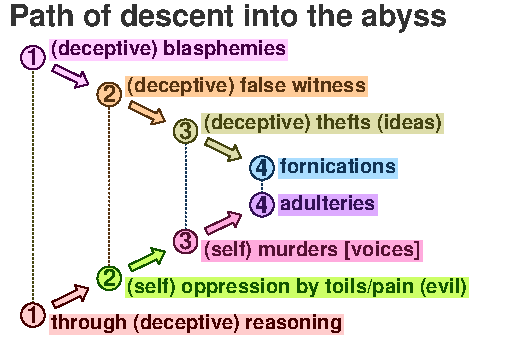
1.
"through reasoning" or
"balancing of accounts"
2.
"evil" as
"oppression by toils"
3.
"murders"
4.
"adulteries"
4.
"fornications"
3.
"(deceptive) thefts"
2.
"(deceptive) false witness"
1.
"(deceptive) blasphemies"
Matthew 15:19 For out of the heart proceed evil thoughts, murders, adulteries, fornications, thefts, false witness, blasphemies: [kjv]
εκ γαρ της καρδιας εξερχονται διαλογισμοι πονηροι φονοι μοιχειαι πορνειαι κλοπαι ψευδομαρτυριαι βλασφημιαι [gnt]
Here as a
chiasm using (related)
meaning rather than words. With an even number of meanings, there is no middle meaning. This descent corresponds to the scattered path in the Ten Pin model.
39. Matthew 18:35 Heart
Matthew 18:35 So likewise shall my heavenly Father do also unto you, if ye from your hearts forgive not every one his brother their trespasses. [kjv]
ουτως και ο πατηρ μου ο επουρανιος ουρανιος ποιησει υμιν εαν μη αφητε εκαστος τω αδελφω αυτου απο των καρδιων υμων τα παραπτωματα αυτων [gnt]
This parable involves
"forgiving" or
"letting go" multiple times. Who in this story has
"forgiven" or
"let go" multiple times?
☐ Lord.
☐
"servant 1" (unforgiving/extorting servant).
☐
"servant 2" (fellow servant).
Might any of these need to
"forgive" or
"let go" more times?
Which one of these might be considered the "
lost"
"sheep" on the "
mountain" or "
definition" of the parable earlier in this chapter?
40. Matthew 22:36-40 Integrity
Matthew 22:37 Jesus said unto him, Thou shalt love the Lord thy God with all thy heart, and with all thy soul, and with all thy mind. [kjv]
ο δε ιησους ειπεν εφη αυτω αγαπησεις κυριον τον θεον σου εν ολη τη καρδια σου και εν ολη τη ψυχη σου και εν ολη τη διανοια σου [gnt]
Someone has
integrity if they have unity of thought, speech, action, and feeling.
That is, there is no contradiction between what they are thinking, what they are saying, what they are doing, and how they are feeling.
This is stated in the
OT and by Jesus in the
NT (New Testament).
Having integrity in this sense appears to not be sufficient.
41. Matthew 24:48 Bad delay
Matthew 24:48 But and if that evil servant shall say in his heart, My lord delayeth his coming; [kjv]
εαν δε ειπη ο κακος δουλος εκεινος εν τη καρδια αυτου χρονιζει μου ο κυριος μου ελθειν [gnt]
The Greek word translated as
"evil" or
"oppressed" is that of
"bad" an used by Jesus as the
"cackling" of a
"bird" as a
false leader or the one who has been
"cackled" by the
"bird".
"κακός" ≈ "bad, worthless, ugly, vile".
"πονηρὰ" ≈ "oppressed by toils" and is often translated as "evil".
The English word
"cacophony" comes, through French, from the
ancient Greek word
"κακοφωνία" ≈ "ill-sounding".
42. Matthew 5:8 B6 Blessed are the pure in heart
Matthew 5:8 Blessed are the pure in heart: for they shall see God. [kjv]
μακαριοι οι καθαροι τη καρδια οτι αυτοι τον θεον οψονται [gnt]
beati mundo corde … videbunt [v]
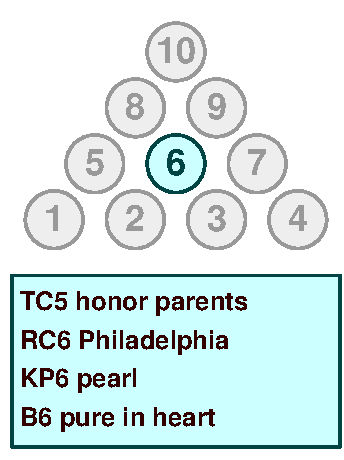 |
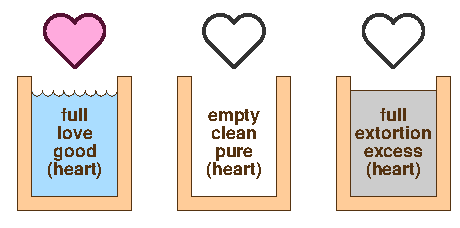
In the Beatitudes, Jesus talks about the "pure" or "clean" in "heart" and "seeing" God.
What does it mean to be "pure" or "clean" in "heart"?
What does it mean to "see" God?
|
The
ancient Greek word
"καθαρός" ≈ "clean, clear, pure" . In Exodus Moses is told that if he
"sees" (the face of) God he will die. Is this not true if you are
"pure" in
"heart"?
43. Exodus 33:20-21 Cannot see the face of God
God is speaking to Moses.
Exodus 33:20 And he said, Thou canst not see my face: for there shall no man see me, and live. [kjv]
και ειπεν ου δυνηση ιδειν μου το προσωπον ου γαρ μη ιδη ανθρωπος το προσωπον μου και ζησεται [lxx]
33:21 And the LORD said, Behold, there is a place by me, and thou shalt stand upon a rock: [kjv]
και ειπεν κυριος ιδου τοπος παρ εμοι στηση επι της πετρας [lxx]
How can the
"pure" in
"heart" in the Beatitudes
"see" God and yet live? Is your answer an inferred (or guessed) opinion? If not, provide support for your answer.
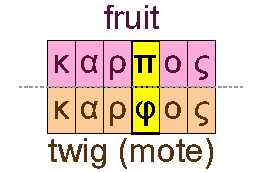
44. Fruit and twigs
What do the above ideas contribute to the following?
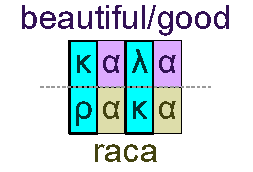
Good (beautiful, raca) fruit.
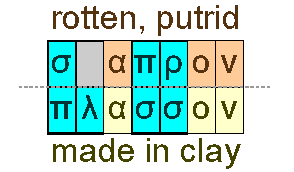
Not good (rotten, plastic/sand) fruit.
No fruit or unfruitful.
45. Matthew 7:13-15 Bitter together
Matthew 7:13 Enter ye in at the strait gate: for wide is the gate, and broad is the way, that leadeth to destruction, and many there be which go in thereat: [kjv]
εισελθετε εισελθατε δια της στενης πυλης οτι πλατεια η πυλη και ευρυχωρος η οδος η απαγουσα εις την απωλειαν και πολλοι εισιν οι εισερχομενοι δι αυτης [gnt]
7:14 Because strait is the gate, and narrow is the way, which leadeth unto life, and few there be that find it. [kjv]
οτι στενη η πυλη και τεθλιμμενη η οδος η απαγουσα εις την ζωην και ολιγοι εισιν οι ευρισκοντες αυτην [gnt]
7:15 Beware of false prophets, which come to you in sheep's clothing, but inwardly they are ravening wolves. [kjv]
προσεχετε δε απο των ψευδοπροφητων οιτινες ερχονται προς υμας εν ενδυμασιν προβατων εσωθεν δε εισιν λυκοι αρπαγες [gnt]
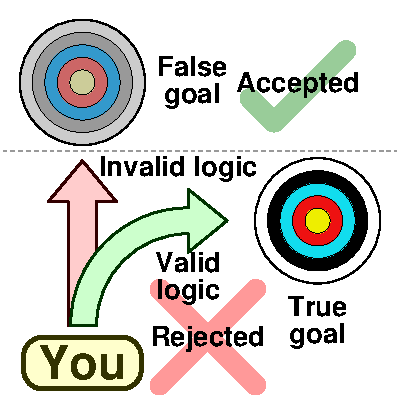
Can the "wolves" be "inside" the "wide" "area" rather than being "inside" the "clothing" of "sheep"?
Can the "wolves" effectively switch the direction signs by "rapturing" or "snatching" the meaning of "lead away (from)" to "lead (to)"
46. Matthew 7:16 Paraphrase
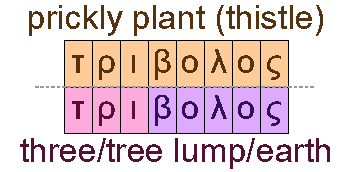
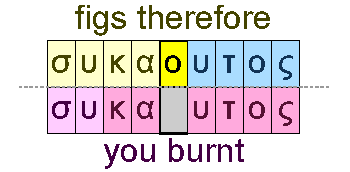
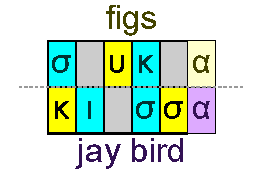
Matthew 7:16 Ye shall know them by their fruits. Do men gather grapes of thorns, or figs of thistles? [kjv]
απο των καρπων αυτων επιγνωσεσθε αυτους μητι συλλεγουσιν απο ακανθων σταφυλην σταφυλας η απο τριβολων συκα [gnt]
Might this suggest that the
"wolves" or
"birds" may
"burn" you in getting their
"figs" from
"thistles"?
Greek word order:
from of the fruit of them (wolves) (you) will know them (wolves) so that nothing [skill, counsel, plan] (they - wolves) together will collect/gather from (of the) thorns grapes or from (of the) thistles figs
47. End of page